Skip to content
← All applications

Virus-Like Particle Conjugates

Virus-like particles and other protein nanoparticles carry hundreds of copies of a ligand, making them powerful scaffolds for vaccines, targeted delivery and multivalent display.
Experimental data

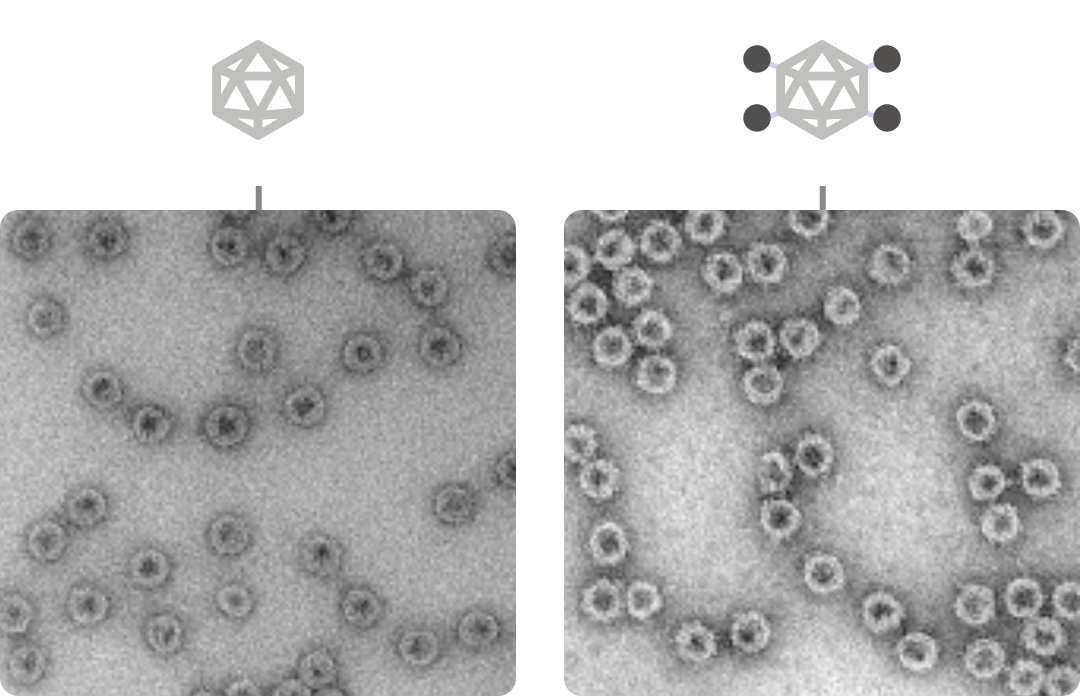
Electron micrographs of virus-like particles before and after decoration
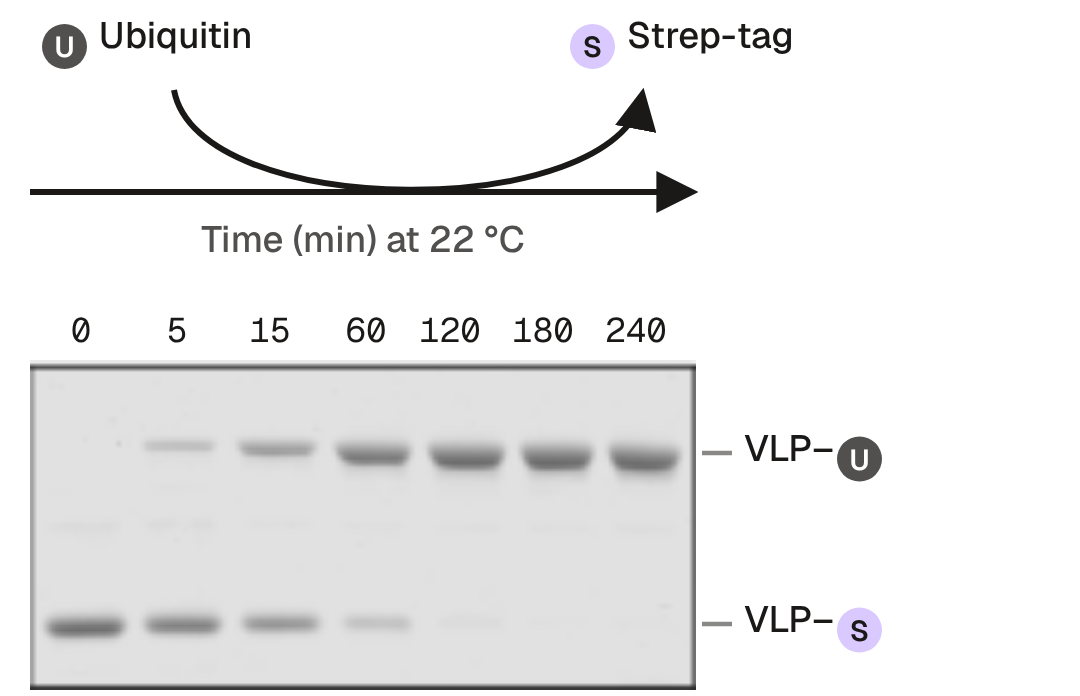
SDS gel of a virus-like particle conjugation over time

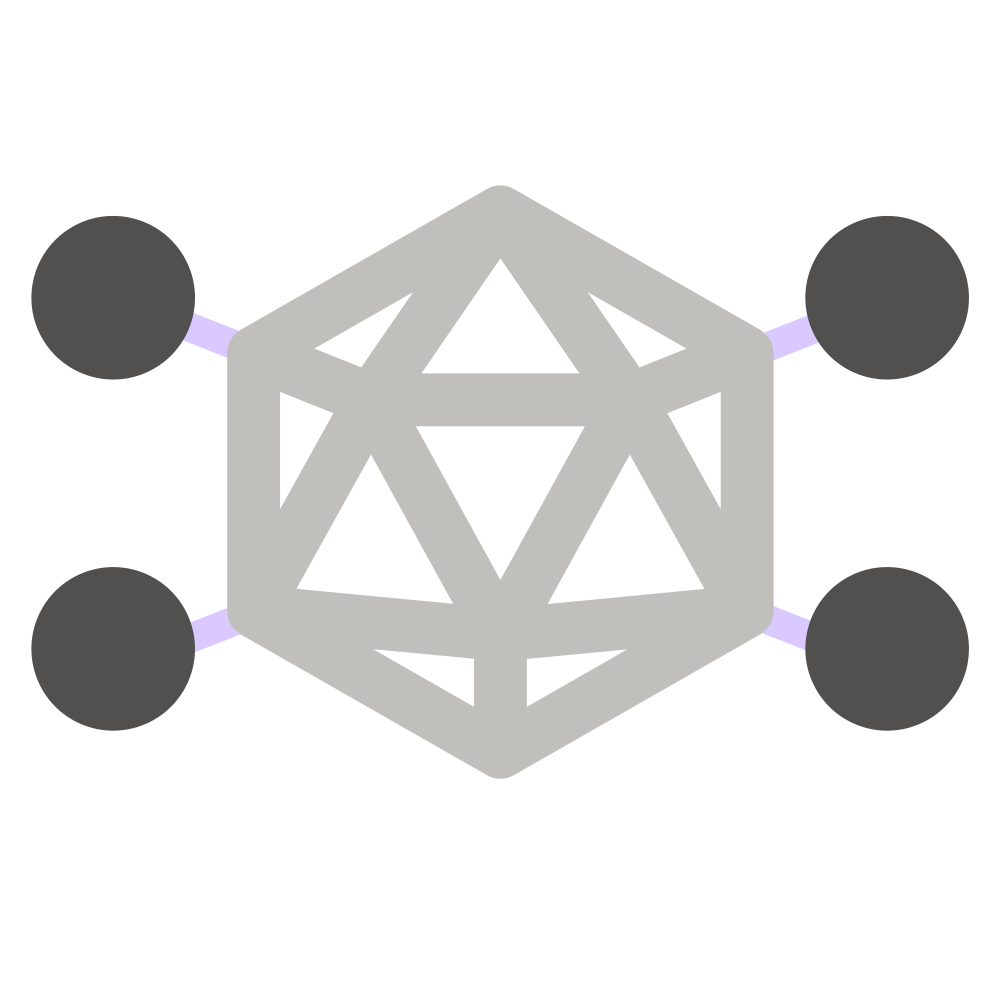
a Electron micrographs of AP205 capsids (180 subunits) before (left) and after decoration (right).b SDS-PAGE showing the AP205 decoration time course. The conjugation with Ubiquitin (U, 1 eq. per chain) replaces a Strep-tag (S) on all AP205 subunits.

How to use

  1. Produce your VLP capsids with accessible Lock- or Key-Tags.

  2. Synthesize or produce your cargo with the matching tag.

  3. Mix with the Connectase ligation reagent and incubate for 2 hours.

Lock-Tag
ELASKDPGAFDADPLVVEI
C-terminal, 19 aa
Key-Tag
AGAFDADPLVVEI
N-terminal, 13 aa

FAQ

Do I need a spacer between the tag and my protein?
For sterically demanding proteins, we recommend an extra arginine (R) N-terminal to the Lock-Tag and two extra alanines (AA) C-terminal to the Key-Tag. Many other conjugations work efficiently without any additional linker sequence.
Which buffers does Connectase work in?
Connectase works over a wide pH and salt range and tolerates common additives such as detergents and chaotropes. It has no special buffer requirements.
How long do I need to incubate?
Most reactions are finished after about one hour at room temperature. Higher temperatures speed up the reaction.
Do I need to remove the enzyme after the reaction?
In most cases, no. Connectase is used at low concentrations and catalyzes nothing beyond the conjugation. Where removal is needed, its His-tag allows capture on Ni-NTA resin.

See all FAQs

Try it in your own lab